Blasting and profiling
Wheel blast, air blast and cabinet systems for scale removal, coating profile and foundry cleaning.
View blasting systemsSurface engineering / industrial automation
Complete automated systems for blasting, vibratory finishing, washing, drying, inspection and production data capture. Built for manufacturers who need measurable surface quality, stable throughput and a defensible cost per part.
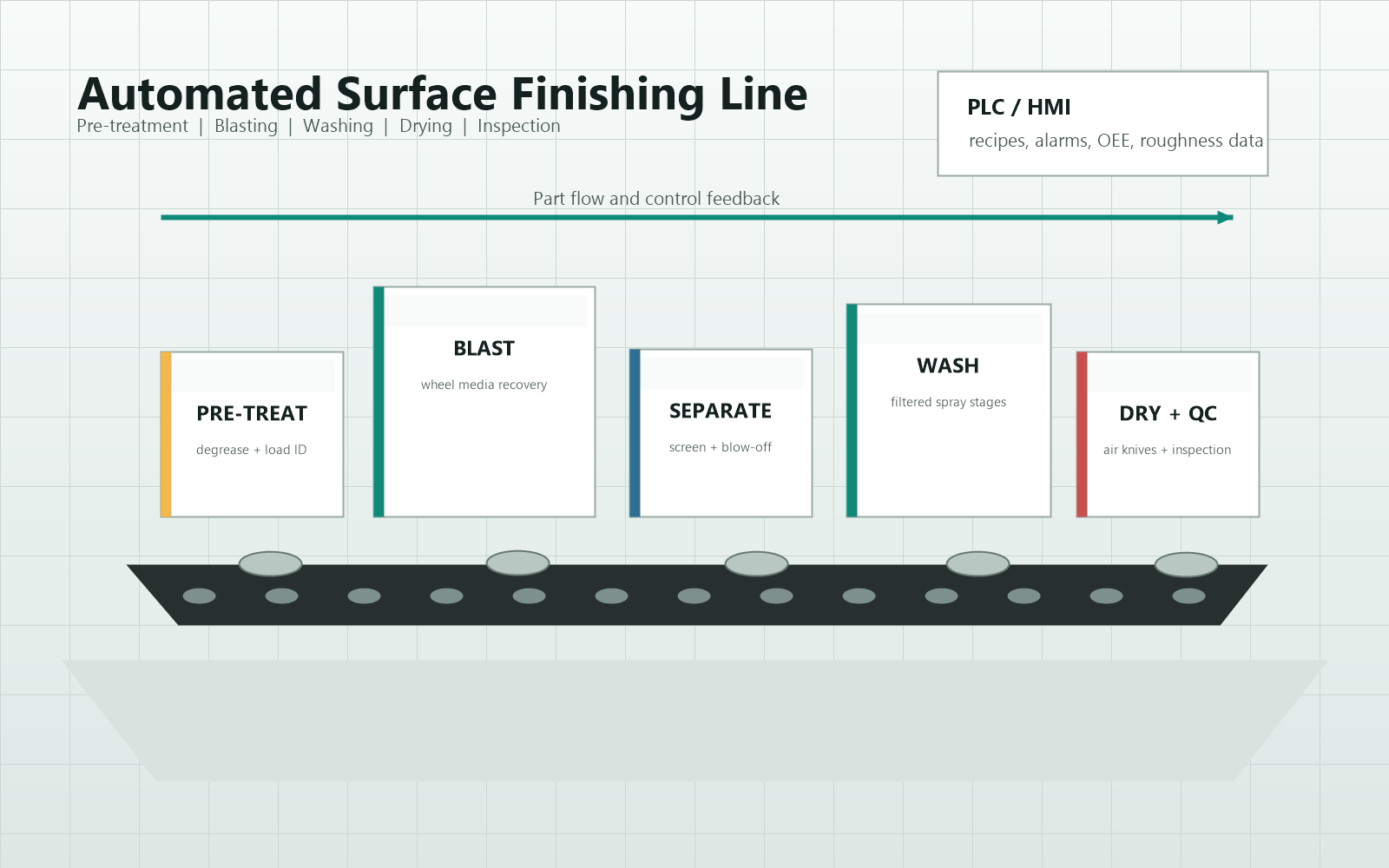
A finishing line succeeds when process stations, transfer points, consumables, sensors and inspection criteria are engineered around the same production target.
Wheel blast, air blast and cabinet systems for scale removal, coating profile and foundry cleaning.
View blasting systemsVibratory and tumbling processes for edge break, burr removal, smoothing and controlled surface texture.
View mass finishingWashers, rinses, air knives, dryers and corrosion protection sized around part geometry and carryover.
View process flowBatch, continuous and robotic layouts for stable takt time, ergonomics and repeatable coverage.
Compare configurationsPLC recipes, HMI screens, alarms, sensors, OEE and process monitoring for production evidence.
Review controlsRoughness measurement, abrasive quality control, first-pass yield and cost-per-part models.
See metricsProcess engineering
We evaluate contamination, burr condition, part handling, media behavior, cleaning burden, drying risk and inspection criteria before selecting equipment. That makes the commercial proposal stronger because the scope matches the manufacturing problem.
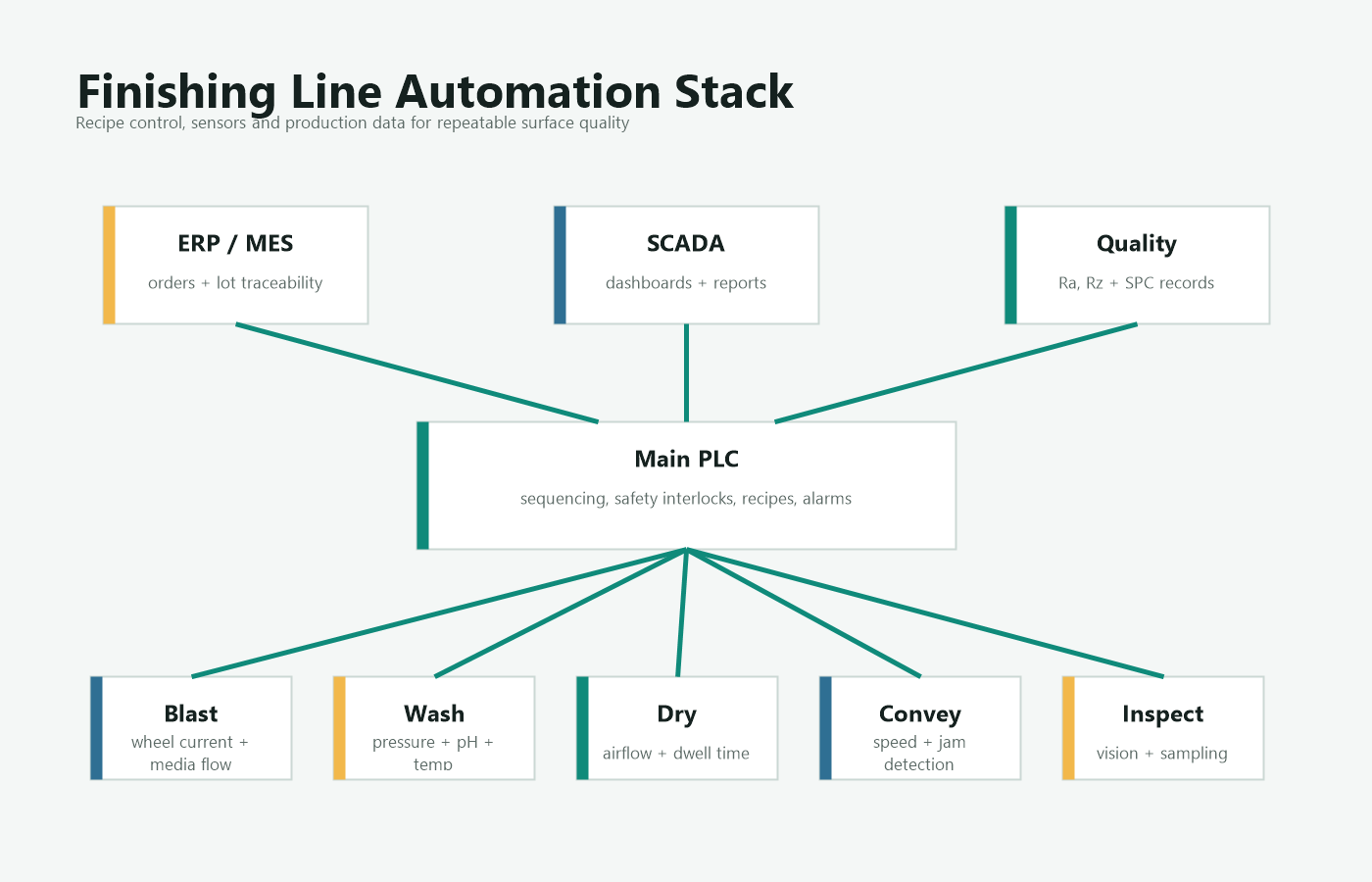
The line should improve more than appearance. The proposal should show how the system affects labor, rework, consumables, uptime and downstream yield.
Use these pages as internal buying guides for equipment selection, process validation and quality control.
Wheel blast and air blast systems for descaling, cleaning, foundry finishing and coating profile control.
Open guideBatch and continuous vibratory systems for deburring, edge rounding, smoothing, polishing and washing support.
Open guideBarrel, centrifugal barrel and centrifugal disc tumbling processes for robust batch finishing applications.
Open guideManual, semi-automatic and robotic blast cabinet systems for precision surface preparation and localized finishing.
Open guidePractical guidance for Ra, Rz, sampling locations, profilometer setup and finishing line acceptance criteria.
Open guideMedia operating mix, separator performance, contamination control and abrasive cost management for blast lines.
Open guideRFQ support
Share part drawings, photos, current surface condition, annual volume, target throughput and surface requirements. The first engineering response should define the process route, equipment scope, controls concept and budgetary ROI assumptions.